
The gravestone of Behnam Layqpour, a 37-year-old tattoo artist murdered by the Islamic regime’s security forces during the 2022 Women, Life, Freedom protests, was vandalized in Iran’s Rasht cemetery, according to the Iranian legal network DadBaan.
Human rights groups claim that Layqpour’s body was returned to his family after four days on the condition that they declare his cause of death a heart attack. Members of his family told the citizen journalism site IranWire that he was shot at close range when he happened upon a protest while enjoying the company of friends.
Layqpour’s sister told the legal network that each blow struck on her brother’s grave landed on her mother’s heart.
“If only you knew that every blow you struck upon it landed on the heart of a mother who still breathes with his memory... landed on the soul of a sister who still waits in hope to see him... landed on the shoulders of a brother who carries the pain of his absence with him every day... and landed on the hearts of all those who would never trade their love for Behnam for anything,” she said. “This act of yours is nothing but a display of disrespect and a fall from humanity, of which no trace remains!”
This is not the first time that Layqpour’s grave has been vandalized, according to his sister, who shared that paint has been thrown over her brother’s resting place in previous incidents.
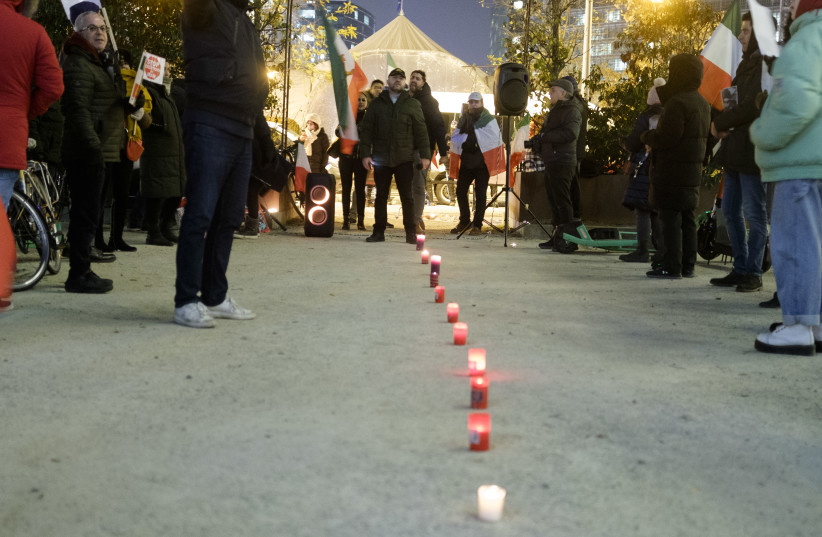
Islamic Republic vandalized, paves over thousands of graves
In the video, which claims to have been taken on June 19, members of Layqpour’s family can be heard stating that, even “after three years and nine months, they still won’t leave this poor deceased person alone… We will not be defeated. We will rebuild it even more beautifully than before.
“No matter how much you destroy it, may you never find peace. Nothing is diminished from Behnam’s worth and values. Whoever did this to Behnam, may a curse be upon everything you have and everything you don’t have.”
The Islamic Republic has frequently vandalized the graves of its victims. In 2020, it destroyed the resting site of the executed champion wrestler Navid Afkari. Last year, it paved over the thousands of graves of individuals killed during the 1979 Islamic Revolution to construct a parking lot at the Behesht-e Zahra.
In 2024, the United Nations’ special rapporteur described the state’s attempts to destroy the graveyard as an effort to “conceal or erase data that could serve as potential evidence to avoid legal accountability” regarding its actions.
In April, Iran International reported that the regime had begun destroying the gravesites of some of the thousands of protesters murdered by security forces during the January protests.
At Tehran’s Behesht Zahra, some of the graves were reportedly leveled and covered with cement, according to the diaspora site. In other cases, inscriptions were reportedly changed.