
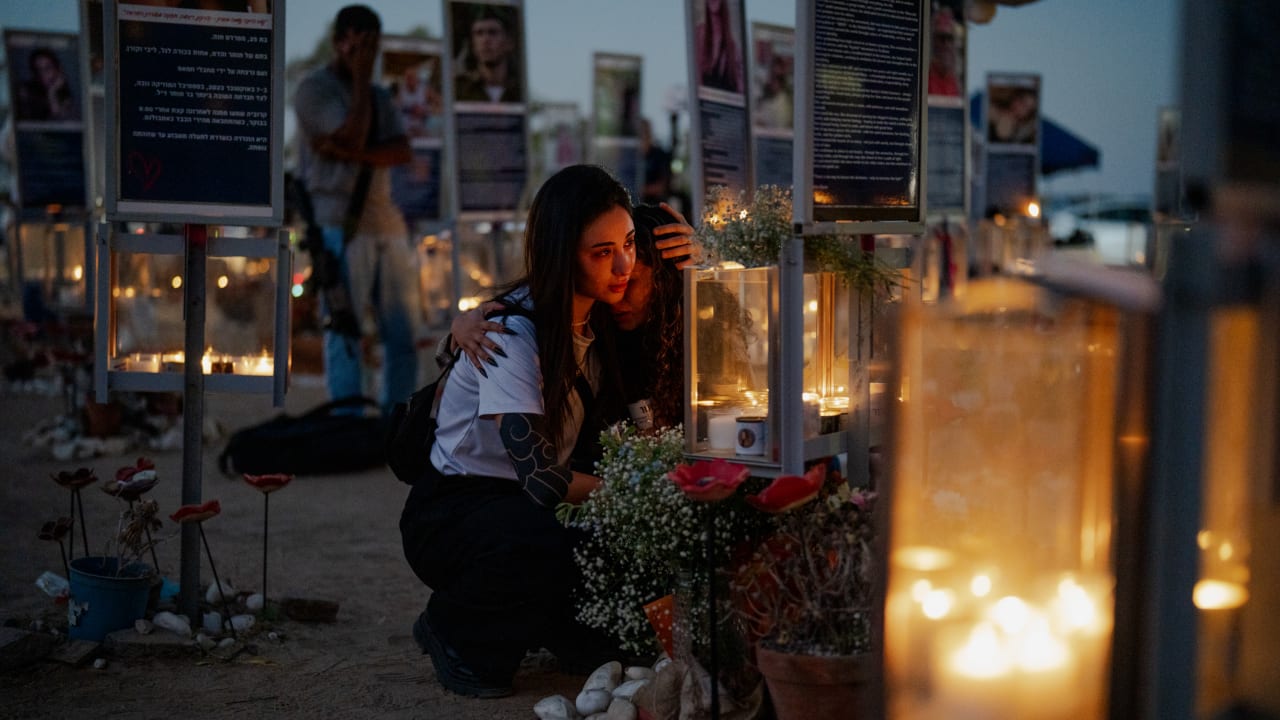

Three years after the Hamas-led massacres in Israel on October 7, the Jewish world faces a question that remembrance alone cannot answer. “Never Again” must be more than a promise to prevent another catastrophe. It must become a discipline of Jewish security, cultural confidence, and national responsibility.
On October 6, 2023, the Jewish world knew how to say Never Again. We had Holocaust museums, commemorations, and school curricula. The next morning, Hamas terrorists slaughtered Israeli families, murdered young people at a music festival, and dragged 251 hostages into Gaza.
Hamas is responsible for its crimes, and Israel’s political and security establishment must be held accountable for the failures that left citizens exposed.
Yet the catastrophe asks something of the Jewish world beyond grief. Have we mistaken our ability to remember Jewish death for the responsibility of building Jewish life?
Beyond survival
Never Again is a sacred promise, but it is an incomplete philosophy. It tells us what must not happen, not what a people ought to become. We do not learn Hebrew to prove Hitler failed, celebrate Shabbat to frustrate Hamas, or raise children as living rebuttals to antisemitism.
We do these things because Jewish civilization is worth inheriting and enriching. Hatred can explain why a people needs protection. It cannot provide that people with a purpose. Survival is the floor of Jewish existence, not its ceiling.
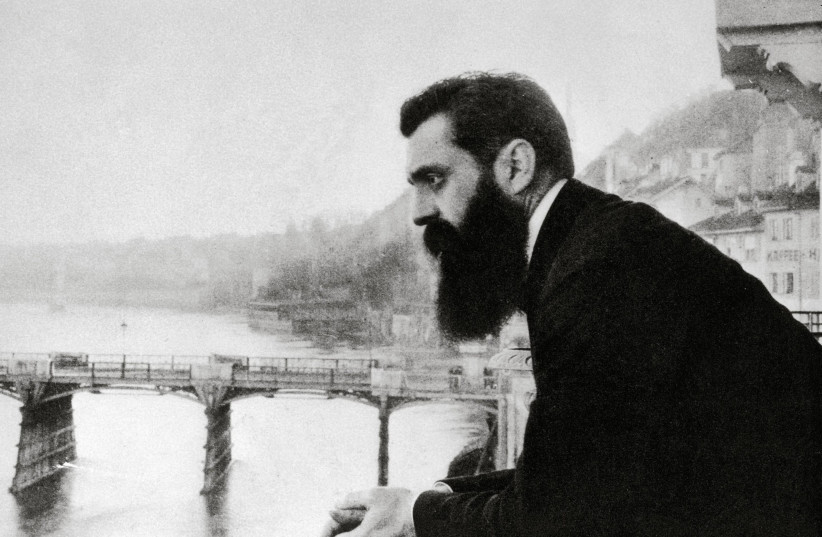
That distinction is at the heart of Zionism. Theodor Herzl’s movement preceded the Holocaust by decades, because Jewish aspirations were never simply a reaction to extermination. He understood that compassion from others could not substitute for Jewish political agency.
But his contemporaries argued over the kind of national future sovereignty was meant to serve. Ahad Ha’am, in his 1897 essay, “The Jewish State and the Jewish Problem,” warned that political ambition without cultural renewal could produce a state of Jews rather than a genuinely Jewish cultural center. He wanted the revival of Hebrew civilization to nourish Jewish life throughout the Diaspora.
Ze’ev Jabotinsky approached the challenge from the other direction. In The Iron Wall, published in 1923, he argued that legitimate aspirations alone could not overcome determined opposition to Jewish self-determination. Jews needed the power to defend a national home.
Yet his essay also rejected the expulsion of Arabs and defended equal rights; his vision of strength was not an unlimited moral license. Security would make a political future possible, not supply its meaning.
Ahad Ha’am and Jabotinsky disagreed profoundly. Still, read together, they expose the danger of pursuing culture without protection or power without purpose.
A defenseless Jewish renaissance risks becoming another chapter of Jewish loss. A well-defended Jewish state that forgets the culture it was created to sustain risks becoming a wall around an empty house.
Jewish power and Jewish purpose do not cancel one another; each makes a different demand on us. This is the distinction our commemorations rarely articulate. Never Again is a vow against destruction. Zionism is an affirmative commitment to creation. The first tells us what we will not surrender. The second asks what we are prepared to build.
October 7 proved that possessing sovereignty and exercising responsibility are different things. Israel had an army, intelligence services, and institutions of state, yet essential systems failed when civilians needed them most.
No appeal to national unity can replace a full accounting of political and military decisions. Leaders must be judged by the responsibilities they hold, not the reputations they hope to preserve. Criticism of failure is not betrayal. A country that refuses to learn from its mistakes invites more of them. A flag is not an alibi.
In the Diaspora, fear has reshaped ordinary Jewish life. The American Jewish Committee’s 2025 survey found that 55% of American Jews changed at least one behavior out of fear of antisemitism. Many avoided displaying Jewish symbols, expressing Jewish views online, or visiting particular places.
These are responses to real threats, not evidence of personal cowardice. But the result is a disturbing inversion: antisemitism increasingly dictates when and where Jews feel free to be Jewish.
We must not allow hiding to become our principal communal skill. A generation taught only how to anticipate threats may forget what it was taught to cherish.
Fear to action
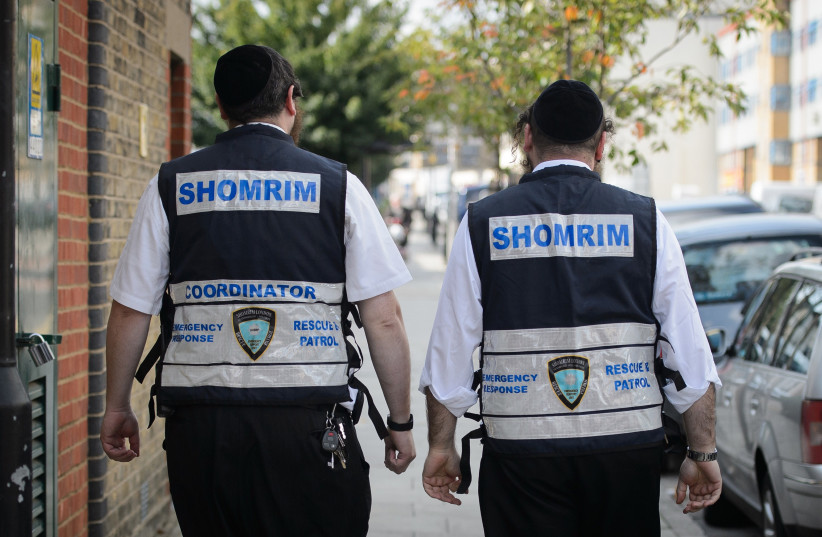
That is why preparation matters. Jewish schools, synagogues, and community centers need tested emergency procedures, trained staff, and cooperation with law enforcement. Professional security, first aid, and lawful self-defense training where appropriate are practical investments, not substitutes for public protection.
Governments remain responsible for protecting all their citizens. Jewish communities must also do what is reasonably within their power. Preparation should make Jewish life safer, not turn it into a permanent siege. The aim is a child who can enter a synagogue without fear and discover a reason to return with joy.
We know organized Jewish institutions can deliver measurable results. Jewish Federations of North America reported in late 2025 that professionally run security initiatives were operating in all 141 Federation communities, up from only a handful in 2018.
That deserves credit. It also exposes a question communal leadership should be unable to evade: if we can count security programs, why not report with equal rigor on Hebrew learning, school affordability, Jewish literacy, and lasting engagement? A successful campaign should be measured by what changes for Jewish families, not by how impressive its annual dinner looks.
Imagine reports that show how many children accessed Jewish schools or camps because fees were reduced, how many teenagers can defend Zionism with knowledge rather than slogans, and how many alumni remain engaged years after a program.
None of those measures captures the full complexity of identity. But difficulty is not an excuse for complacency. The teachers, philanthropists, and volunteers deserve institutions that take results as seriously as fundraising. A press release is not a strategy. A photograph is not a legacy. We must stop mistaking the management of Jewish anxiety for the building of Jewish civilization.
Building Jewish life
The civilization we seek to build must be more compelling than the dangers surrounding it. Judaism is not a permanent emergency meeting. It is law and laughter, poetry and prayer, labor and scholarship, argument and aspiration. Children should know about Auschwitz and the atrocities of October 7, but also Maimonides, Yehuda Halevi, the revival of Hebrew, and the achievement of modern Israel.
They should know what our ancestors created, not simply what their enemies destroyed. If we define Jewish identity mainly through persecution, we hand those enemies the right to write our curriculum.
Power carries moral obligations. Israeli sovereignty demands accountability and respect for human dignity; Diaspora security requires lawful restraint and solidarity with neighbors. We must be able to criticize Israeli governments without questioning the legitimacy of Jewish nationhood, and challenge antisemitism without suspecting everyone who disagrees with us.
Strength without ethics becomes a different kind of weakness. But ethics without the ability to defend those in our care leaves noble intentions at the mercy of violence. We should aim for neither permanent fear nor permanent combat. The measure of Jewish strength is whether it allows a confident, creative, decent Jewish life to flourish.
So light the candles. Read the names. Preserve the testimony, and teach the crimes without euphemism. Then, when the ceremony ends, ask what changed. Did a school become safer? Did a child begin learning Hebrew? Did an institution build something more durable than its latest fundraising appeal?
There is nothing wrong with commemoration, and everything wrong with using it as a substitute for duty. The dead deserve our remembrance, but the living deserve our competence, courage, and imagination.
The enemies of the Jewish people have spent centuries trying to decide whether Jews would live. They must never be allowed to decide what Jews live for. Never Again is not simply what we say for the dead; it is what we build for the living.■
Adam Scott Bellos is the founder and CEO of The Israel Innovation Fund and the creator of Project Maccabee, an initiative focused on Jewish education, self-defense, and communal resilience.