Newsrooms are home to people of all types, especially when it comes to where they stand on the political spectrum.
Indeed, not everyone will always reflect the perceived editorial tone of the paper, but more importantly, it means that the voices that produce The Jerusalem Post are more diverse than many would realize.
While the Post is often considered by many to be a Center-Right publication, our news outlet is actually far more nuanced than that. To quote former editor-in-chief Yaakov Katz, the outlet can be best described as “Zionist pluralist,” and whether people are on the Right or the Left, their voices have a place here.
But by no means does that mean a given staffer’s political leanings will impact the integrity of a story. Far from it. Professionalism is still the name of the game here, and it’s the good of the story that comes first. While personal feelings have their place, it doesn’t come at the cost of compromising a report’s accuracy.
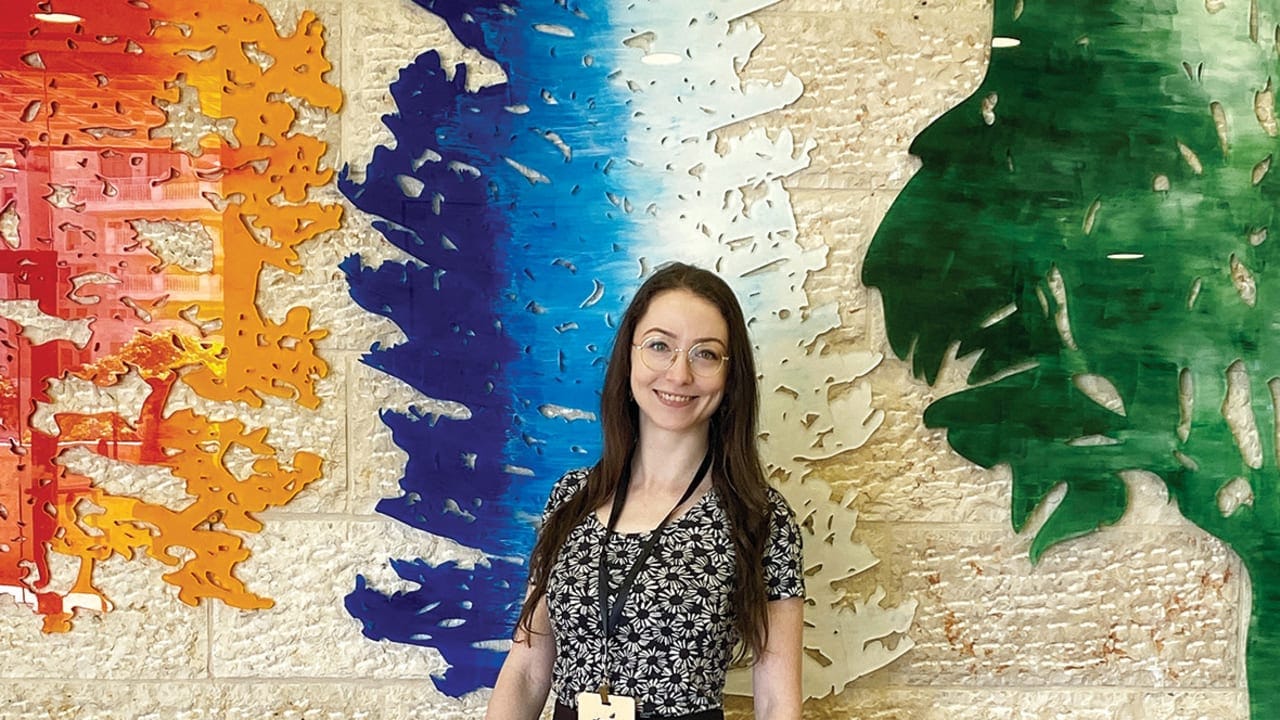
This blend of personal passion and consummate professionalism is perfectly embodied by Hannah Rozenblat.
Rozenblat is one of our seasoned and skilled copy editors. These staffers are arguably the last line of defense a newspaper has before articles get published, making sure everything is perfect and no inaccuracies or mistakes are included. And in a field that moves at high speeds, when reporters can file stories rapidly without time for checking typos or the correct spelling of names, copy editors like Rozenblat are vital.
But while she wages war on mistakes in the press, Rozenblat also pushes for peace and coexistence in her personal life.
An activist and advocate, Rozenblat is the founder of Kotvim B’Yachad (Writing Together), a group that promotes coexistence by creating dialogue through writing. It’s her passion project, and it has only grown over time, hosting events at various locations throughout the city.
In Jerusalem sat down with Rozenblat to talk about her work, both at the Post and off the clock.
What got you into editing? What made you want to pursue a career in journalism?
Since I was a child, I knew I wanted to be a writer, and that’s something I’ve pursued in various forms throughout my academic and professional journey. I have both a bachelor’s and a master’s degree in creative writing (plus a master’s in art history), and my career has included stints at literary journals, publishing companies, newspapers, museum editorial departments, and more.
I wouldn’t say that I was pursuing a career in journalism specifically, but it’s one of the many forms of writing that interests me, along with academic and creative writing.
Editing has been a natural outgrowth of my work as a writer. It allows me to engage with the work of other writers and has given me the opportunity to work on many interesting projects, including novels and nonfiction books.
What brought you to ‘The Jerusalem Post’?
I started working at The Jerusalem Post in 2024 after seeing an advertisement for copy editors. This was during a period when I was spending an inordinate amount of time reading the news, and I took the opportunity to be actively involved.

What is it like editing the news with a Left-leaning view?
I read news sources from across the political spectrum, which makes me more aware of what’s covered or left out in each case, or the way a story is spun, depending on the outlet and the target readership. This perspective makes it more noticeable when I see stories either ignored or presented in a way that leaves out crucial details that don’t align with a writer’s or an editor’s political viewpoint.
I also notice an unfortunate pattern – which stories are subjected to closer scrutiny or not covered altogether, which voices are censored, which perspectives receive more attention, how events are presented, which words or phrases are deemed too “controversial,” and so on. We live in an increasingly polarized world that often fails to make space for multiple narratives, and I think it’s important to address that.
Readers rely on newspapers to report on what’s happening, and while certain things might make people uncomfortable for whatever reason, pretending it isn’t happening or blocking coverage isn’t the way to go. At the same time, I edit many articles by journalists and columnists who present fair and balanced reporting, and those are always gratifying moments in my work.
What’s a memorable story from your career?
Working as a journalist opens many doors, giving you access to closed events and people you would otherwise never have met. I’ve had many such wonderful opportunities over the years, and it’s hard to remember them all.
One instance comes to mind: In 2016, I saw that [journalist-activist] Gloria Steinem would be speaking at a closed event in New York. I contacted the organizers, expressing interest in covering the event as a journalist – and that was how I got to meet Gloria Steinem. There’s a nice photo somewhere of that moment.
Tell me about your activist work and the organizations you’ve been involved with.
One of the primary organizations I’ve been involved with is Standing Together, which has also become one of my main communities in Jerusalem.
Attending their events and becoming familiar with the community was what encouraged me to pursue my own project – founding Kotvim B’Yachad. The first event I organized was held at Standing Together’s Purple House in Jerusalem, and I received a lot of support and encouragement from the organizers there.
Another organization whose meetings I often attend is the Interfaith Encounter Association, which builds bridges between people of different religions through dialogue and cultural exchange.
What makes Kotvim B’Yachad special?
It’s a writing community I created in 2024, which brings together Jews, Palestinians, and internationals for creativity and self-expression. We hold regular events in various spaces across Jerusalem, including monthly communal writing sessions and themed workshops run by guest facilitators. We also organized a storytelling event this past January, which was our biggest event yet.
The inspiration for the project came from my experience studying creative writing at Bar-Ilan University’s Shaindy Rudoff Graduate Program in Creative Writing, where the diversity of the student body showed how powerful writing can be with other people.
My goal was to bring people together during a time when many of us needed a community more than ever, and create a space that encourages dialogue, openness, and understanding.
At our writing sessions, we do a couple of writing prompts followed by sharing and reflection, which leads to interesting and sometimes unexpected discussions on a variety of topics.
The idea is that sharing our stories and personal experiences with each other allows us to build more meaningful connections based on understanding, curiosity, and an openness to different perspectives. As a writer, this is what reading and writing have meant for me – expanding our horizons, sharing our inner selves, and learning to understand and empathize with others.
One of the things that makes the Kotvim B’Yachad community special is that it’s not limited to people who identify as writers. Many community members have said that they don’t consider themselves writers but feel that they truly benefit from the events, which allow them to explore their thoughts and feelings while getting to know other people on a deeper level.
What advice do you have for aspiring journalists and peace activists out there?
First, get involved in whatever capacity you can. For aspiring journalists, reach out to editors, develop connections, and pitch articles. Follow your interests and see where you land.
For peace activists – get to know the organizations in your city that are doing the kind of work you’re interested in, attend events, learn about the reality on the ground, and see how you can contribute. There are many different ways to be involved, and whatever your strengths or limitations are, you can find something you’re able to do.
As a writer, you are in a position to draw attention to stories that deserve a wider audience. You can raise awareness, highlight issues, and share personal experiences from your activism efforts that might resonate with others. Use your unique voice.