
Outgoing Mossad chief David Barnea led the agency in efforts to change the entire Middle East, former top Mossad official Ilan Rom told The Jerusalem Post in an interview on Wednesday night.
Rom, who served in the Mossad for around 25 years, retiring with a rank equivalent to a brigadier-general in the IDF, discussed Barnea’s “revolution of remaking portions of the Mossad” with the Post in detail.
He said, “The purpose was to remake the system. Before the Mossad could perform great operations, but only one or two at a time, such as the “Folders Operation” [the agency’s seizure of Iran’s nuclear archives in 2018], and they would take many years, a big time investment, many people working on them, and with the very high standards of the Mossad.”
Yet, he said, “With the new structure of the organization, we could carry out, and have, dozens of operations at the same time, like we did during Operation Rising Lion [June 2025].”
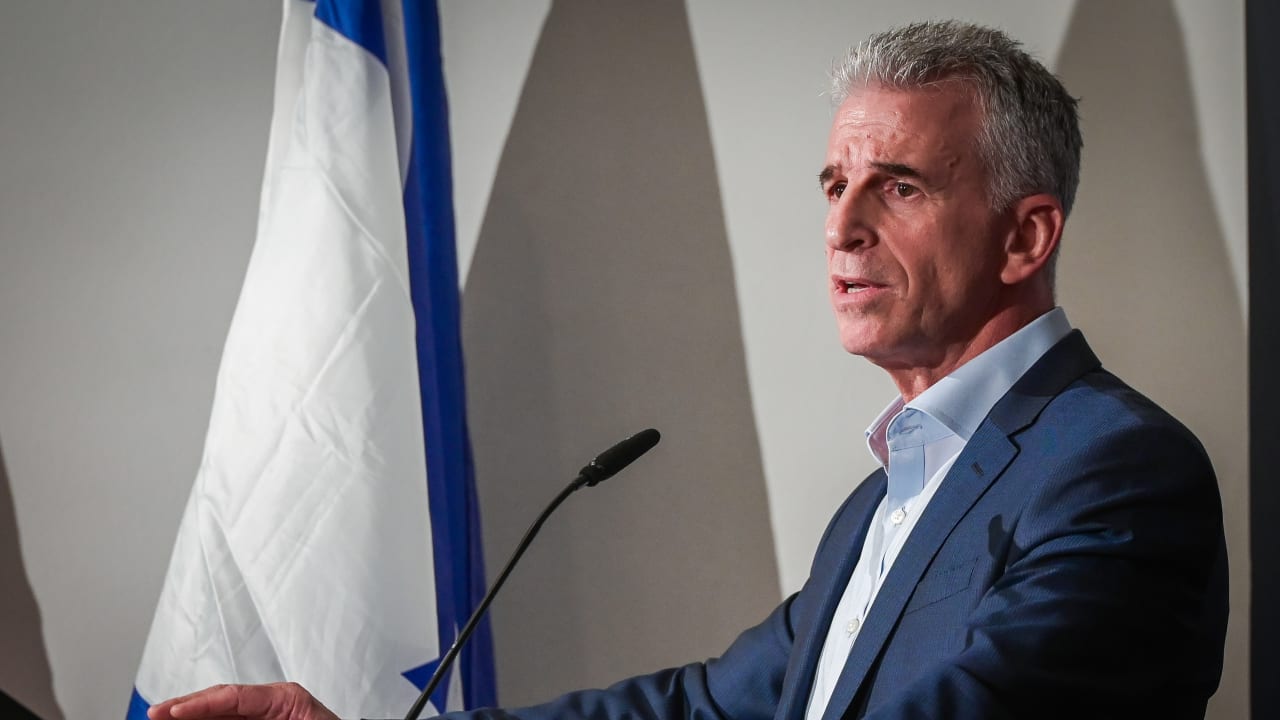
How did Barnea accomplish such radical change within Mossad?
How did Barnea make it possible to accomplish such a radical change?
“There is an attribute of Dadi that he always gets 120% out of every person: out of every sub-commander, and every agent, including much more than the person thought they could do,” Rom said.
Barnea accomplishes this by “personal example,” he said. “He works really hard to get the maximum accomplished. He pushes, he is super capable of showing people how you get to your potential to build an organization in a way which supports these intensive activities.”
Pressed about how Barnea was able to overcome opposition from multiple Mossad division chiefs who believed that these moves would lead to lower standards and botched operations, he responded, “Dadi proved he was right, and they were wrong. When you change the organization – when Meir Dagan did big changes, five division chiefs left, ok. They leave, and they won’t participate. It impacts people’s careers. But he still got help from other good people.”
How was Barnea able to foresee and develop such a monumental change? Rom said, “It started from a deep understanding of the profession, of all of the different disciplines within the profession, that is built over many years, a profound intelligence, and a vision to see changes in the world and how they will impact you in another five to 10 years.”
“You need to plan before. This takes time and years until new ideas can actually work. He also has this ability: to foresee trends in advance, then understand what is needed, then understand how to do it, meaning how to direct actions to accomplish the changes, and then the command capability to lead this forward. It is always hard. He has all three capabilities: identifying the issue in advance, how to address it, and the power to implement “the changes,” the former senior Mossad official said.
In addition, the Post asked Rom about a major Mossad operation to destroy Iran’s nuclear facilities, which was canceled in the spring of 2024 so that the air force could take the lead on the issue in 2025.
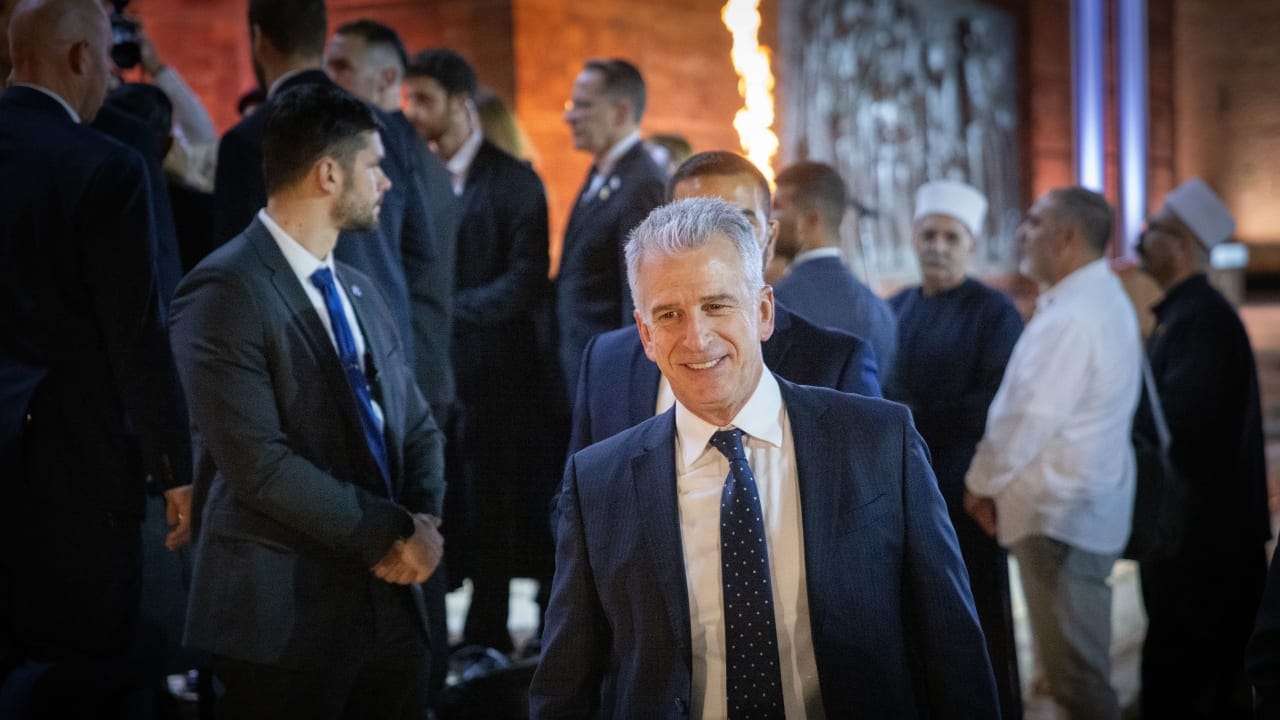
Many top IDF officials, including former IDF chief Shaul Mofaz, believed the operation was a fantasy and not feasible, which contributed to its cancellation, but the Post understands that Barnea believes it could have succeeded.
Rom said, “I have no doubt that it would have succeeded. Any operation always has issues and problems. Before the 2023 war, I was working on it. The full checklist was ready to go. All the different fronts and pieces had come through.”
“I have a lot of respect for Mofaz,” Rom said. “But it is a problem to take a person who doesn’t recognize [certain espionage disciplines and then to ask them to judge whether an operation is feasible. Could you ask the Mossad to check something the air force proposes? So they took someone who doesn’t know the Mossad deeply. I have no doubt that if they had asked such people about the feasibility of the ‘Folder Operation,’ they would have also said that it was impossible,” Rom insisted.
'There is no Mossad operation that is not ground-breaking'
Continuing, the former senior Mossad official noted, “Now we know that the turning point of the broader campaign was the beepers – they did even more than what we expected. Mossad people know this from real life, not just from surveys and documents.”
“There is no Mossad operation that is not ground-breaking. If it is not ground-breaking, then it is not interesting. Enemies always need to be surprised. Operations must be different and on the border of what is imaginable and doable. This is the role of the Mossad – to pull off these operations,” he said.
Next, the Post asked whether there were many such large Mossad operations that were canceled due to the high risks the agency must take to be imaginative in its plans.
Rom said, “No, most big operations actually are carried out. This is because they get reviewed with the utmost scrutiny, including by the head of the Mossad himself. All of the different pieces and officers get checked constantly, from the operations to the technology to the intelligence.”
“If they stop an operation, it is usually in the middle if a problem arises, but not if they get all the way to the end,” he explained.
Moreover, Rom said, “Operations that get all the way to the end of their planning and preparation, if they do not happen, it would only be if the civilian decision-making echelon does not approve it at a late key moment. This can happen even if they pre-approved it earlier.”
Returning to the canceled operation against Iran’s nuclear sites, he said, “There was no reason it would not succeed. Tell me why it would not work? Don’t tell me why it’s complex. You build a wall from 1,000 bricks. Tell me which brick is improper. During Operation Rising Lion, fantastic things happened. It is about belief.”
Further, he noted that in Operation Rising Lion, “All the things happened at one time. Many serious people were surprised it succeeded. Dadi gave the Mossad the value of being optimistic about operations. You can always look at what might not work. If you have 1,000 bricks for a wall, and one does not fit, instead of stopping, you try again, or come at the problem from the right side or the left side or from some other different angle,” until you crack the problem. “It also really depends on the people.”
Returning to the concept of the Mossad changing its range to lean in heavily in influencing the course of larger wars, Rom explained, “Usually, collecting intelligence is most of the work, but Dadi did something maybe for the first time in history. Usually, even special forces like Sayeret Matkal and Shayetet 13 do not know what to do during a big war.”
“The Mossad figured out what to do during a big war. Usually, it is the IDF that needs to win wars, not the Mossad. Both during the 12 Day War [in 2025] and during Operation Roaring Lion [in 2026], the Mossad substantially helped with the IDF’s efforts,” he noted.
In addition, he said, “The synergy has had a substantial impact. We still have the air force, and the Mossad is smaller. But the return on the investment is very high compared to its size. The Mossad brings forth lots of power and cunning in war.”
Finally, he said, “When I joined the Mossad, the motto was, ‘By way of deception, thou shalt do war.’ Later, it was changed to, ‘For want of deception, an army falls,’ partially because they said, ‘The Mossad does not do wars!’ Now, the Mossad needs to return to its original logo. Dadi brought it back.’’
Concluding, Rom recalled, “The head of the Mossad helped change the Middle East. Also, along with the prime minister, the cabinet, and the IDF, but the Mossad under Dadi took a major role in this, a much larger influence than we might have dreamt. I hope the new Mossad chief will continue with this.”