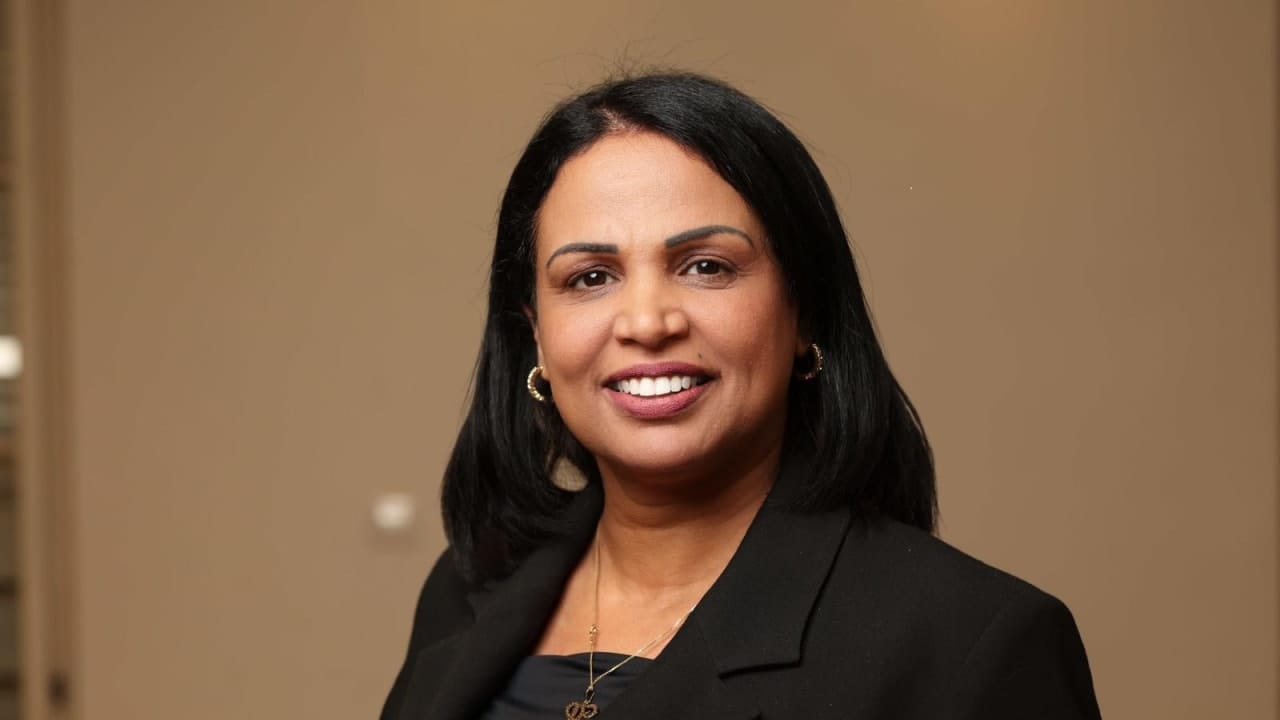
Whenever Israeli Bedouin Hanan Alsanah was told she could not do something, she did it anyway. Whether the obstacles came from Israeli society, the conservative norms of her Bedouin community, or her own family, she repeatedly defied expectations, breaking barriers for herself and helping carve new paths for thousands of women with Itaach-Maaki - Women Lawyers for Social Justice.
The youngest of 11 children, Alsanah was expected to follow in the footsteps of her eight sisters and leave school early to prepare for marriage, a common expectation for girls in her community.
While becoming a wife and mother appeared to be the path laid out for her, she dreamed of becoming a lawyer. Unwilling to accept “no,” or a reality in which her gender confined her ambitions to the home, she negotiated her way into higher education and built a career that has since transformed the lives of thousands of women.
“Stubborn” was how the women’s rights activist and lawyer described herself in an interview with The Jerusalem Post on Sunday.
Though not initially supportive, her parents agreed she could attend Ben-Gurion University of the Negev on the condition that she wear a hijab, train only to become a teacher, work exclusively with women, and remain in southern Israel.
Education is the key to 'freedom from oppression'
Forbidden from pursuing her dream career, which her family considered a profession reserved for men, Alsanah instead found a different calling during a Middle East studies course: “fulfilling the dreams of other women” in her community.

Believing education was the key to “freedom from oppression,” she turned in 2002 to tackling illiteracy, which disproportionately affected Bedouin women. Again, she was told she could not make a change because she was only a woman, and again, she did it anyway.
“When I started my journey in Rahat, people told me, ‘You will not succeed, you will not manage, it’s impossible. You cannot do it… Women will not go out to participate in this program,’” she recalled.
The Central Bureau of Statistics (CBS) reported in 2003 that the overall illiteracy rate among Arab female citizens in Israel stood at 14.7%, though among Bedouin women, particularly older generations, the figure was significantly higher.
What began as a single class in Rahat expanded into 11 classes across the city and nearby villages, unrecognized as such by the government.
With support from the Education Ministry, the program became a formally recognized school for women, and Alsanah’s model was later replicated in Arab villages across the country, though with greater difficulty.
In remote communities without municipalities or basic infrastructure, she again heard that it was “impossible,” yet still built systems that provided women with a high school-level education.
Training local women to take leadership roles
In each of the 15 unrecognized villages, Alsanah trained local women to take on leadership roles, so they could continue the programs independently. This sustainable model later enabled her to represent her community as the first Bedouin woman on the United Nations Committee on the Elimination of Discrimination against Women (CEDAW), a body of 23 experts focused on ending gender discrimination.
After five years on the committee, she turned her attention to improving women’s economic and housing rights.
This model of women’s empowerment required male cooperation – meeting with sheikhs, municipal leaders, and policymakers – and could be more easily adopted in Islamic communities.
She said that legislation at that time provided meaningful protections for Jewish women in state-recognized communities but did little for Bedouin women in unrecognized villages. Without municipalities, these women could not access rental assistance or state support, an absence that especially affected victims of domestic violence.
Although Alsanah knew the struggles of Bedouin women firsthand, she realized that much of the wider community did not. Noticing that women’s names were often absent from Arab newspapers, she founded her own publication in 2010, drawing strong criticism from parts of the Islamic community.
The paper was founded against all odds, she said, “with no money, only the feeling that we want to speak up, we want to help, to be heard, not to be scoffed.”
Faced again with claims that it was “impossible,” this time framed through religion, Alsahah said she would abandon the project if critics could prove that including women in the media was contrary to Islam. The challenge went unanswered, and the publication continued, eventually featuring articles from some Islamic opponents of women’s rights.
Though the publication did not run for long, Alsanah said it closed after achieving its goal: the inclusion of women in mainstream Arabic publications.
Her work enabled many “firsts” for the women she supported, yet she continued to see “community, culture, social, and political oppression.” She concluded that “policy change is not enough,” and that women must also reach leadership positions.
While she found support from some men when advocating for women’s economic and educational rights, she said that backing often faded when it came to advancing women into senior decision-making roles. In that gap, she saw Jewish women as potential allies in a broader push for equality.
She participated in Alnashmiyat, a women’s leadership movement that contributed to a 22% increase in Bedouin women’s voter turnout, and worked with Jewish women’s groups to help transport women from remote villages to polling stations.
Alsanah said that the only time her confidence wavered was after Hamas’s October 7 attack on southern Israel.
Faced with the state’s failure to protect residents, she considered leaving with her family but ultimately chose to stay, feeling a responsibility to her community.
As a resident of the South, the images flooding WhatsApp on that and subsequent days were especially distressing. The only woman in a group chat of more than 260 community leaders, she understood that her next steps carried significant weight as pleas for help poured in.
She quickly began coordinating the transfer of survivors to activists and humanitarian workers, arranging placements in homes in Beersheba and Rahat.
“We wanted to show the people that we can do it, [that] in this dark, there is light,” she said, adding that the rhetoric of National Security Minister Itamar Ben-Gvir was not enough to break her connection with Israel’s Jewish community.
Alsanah went on to cofound the Jewish-Arab Emergency Relief Centers in the Negev, where hundreds of volunteers from across backgrounds came together after the massacre perpetrated by Hamas. Again, she was told the idea would fail, that Jewish participants would be too afraid to cooperate with Arabs, but the initiative drew widespread engagement.
President Isaac Herzog, protest leaders, and government officials all visited the center to meet the more than 400 volunteers.
“Everybody came because they wanted to see hope, [to see] how we are going to rebuild the state,” she told The Jerusalem Post, “to see this partnership is possible, to be together, to see the other’s pain even if we don’t agree.”
The project reinforced for her the importance of women in any peace process, she said, noting that women had driven an initiative many men dismissed as unrealistic.
“Women are half the population, so they must have half the solutions,” Alsanah said.
The emergency relief center also helped bridge a gap, giving Jewish women insight into life in unrecognized villages. She said that many were unaware that these communities lack shelters – a devastating absence during Hamas’s bombardment.
In one case, it provided an opportunity for a Jewish relative of a hostage to work alongside a woman mourning more than 50 family members killed in Gaza.
Amid a long list of projects and organizations she founded or supported, Alsanah also completed her law qualifications in Kiryat Ono. Though her parents and most of her siblings are now proud of her, her graduation did not receive the celebratory response typically given when a man passes the bar exam.
She has since joined Itach-Maaki – Women Lawyers for Social Justice, becoming co-executive director in less than a year; she has decided her next goal is the implementation of UN Resolution 1325, which calls for greater involvement of women in the prevention and resolution of conflicts, peace negotiations, peace-building, peacekeeping, humanitarian response, and post-conflict reconstruction.
As part of that effort, Alsanah is working to convene an informal dialogue between 50 Palestinian and 50 Israeli women, believing that solutions to the long-standing conflict may be found among that part of the population that is largely excluded from formal negotiations.
She is also increasingly active in challenging Hadash, the Democratic Front for Peace and Equality, an Arab-Jewish political alliance in Israel, insisting that women’s issues not be sidelined at a moment when she believes women’s inclusion in politics could help address the Arab murder rate crisis and broader anti-Arab discrimination.
“I want to be part of the decision-making in Israel. I want to be a part of the policy design in Israel because it’s come from [a place of] responsibility, commitment,” she concluded.
“We need to bring our recommendations, our mechanisms, our solutions, and we want to be a part of the solution.”
Alsana has already decided she will not listen to claims of “it’s impossible” to solve the long-standing Israeli-Palestinian conflict, and she intends to continue working on the issue while completing her doctorate at Tel Aviv University.