
Liberal US Jewish leaders are urging Israel’s opposition parties to abandon their campaign promises and join hands with Arab parties in order to oust Prime Minister Benjamin Netanyahu.
Following Tuesday’s vote, Netanyahu’s bloc was projected to win 53 seats in the Knesset, Israel’s legislature, while the camp of his main rival, Gadi Eisenkot, is projected to win 48 seats. That means both fall short of the 61 votes required to form a new majority governing coalition.
One of the most significant shifts in electoral politics coming out of Tuesday’s results was the success of Israel’s two Arab parties, the Joint List and Ra’am, which nearly doubled their representation to 19 seats.
Those gains would be enough to give the Netanyahu or Eisenkot blocs the necessary seats to form a coalition, but neither has publicly indicated a willingness to include Arab-led parties in their coalitions. The idea is also anathema to much of the Jewish Israeli electorate after the Hamas attacks of October 7, 2023.
Nonetheless, US Jewish voices urged Eisenkot and his allies – collectively known as the “change” bloc – to welcome the Arab-Israeli parties as partners for implementing that change.
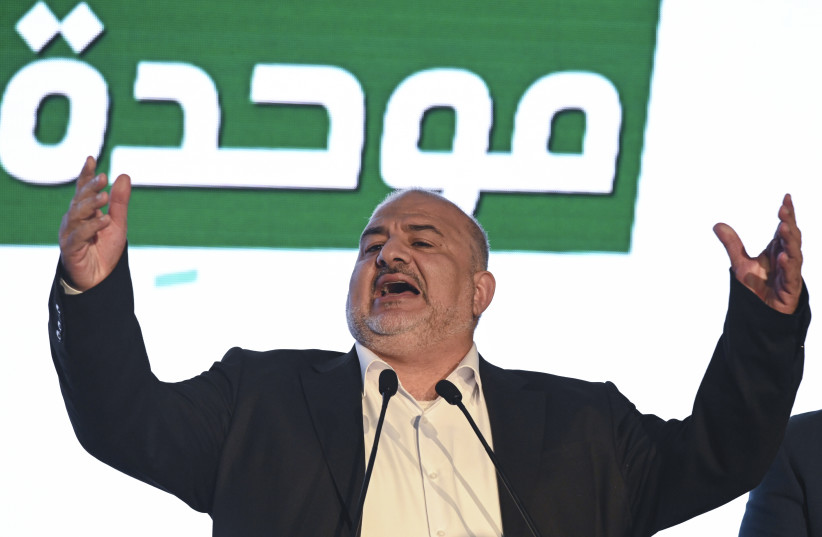
Jeremy Ben-Ami, president of the liberal Zionist lobby J Street, hailed the “extraordinarily high voter turnout,” estimated at nearly 78% of eligible voters, and praised “the historic participation of Arab citizens of Israel,” saying that “their voices and votes are a vital part of Israel’s democratic fabric.”
“This is a moment for the Jewish opposition parties to demonstrate genuine leadership by reaching out to the Arab parties and working together to form an alternative government,” Ben-Ami continued. “Israel cannot build a stronger, more inclusive democracy while treating the political representatives of one-fifth of its population as illegitimate governing partners.”
'Important opportunity for change'
Dan Shapiro, former US ambassador to Israel during the Obama administration, commended the voters for creating an “important opportunity for change.” That change, he added, could occur if Eisenkot’s bloc worked with Arab parties.
Shapiro added in a follow-up post that “in almost no scenario” would far-right ministers Itamar Ben-Gvir and Bezalel Smotrich “continue to have the influence they currently enjoy.”
“Ensuring that is the case is an important incentive to the opposition bloc to avoid going to new elections, which would extend the damaging tenure of these extremist ministers,” Shapiro said.
Gabriel Epstein, a senior policy associate at the Israel Policy Forum, encouraged Eisenkot and his partners not to shy away from taking the historic step of joining with Ra’am and Joint List, both of whose support they would need to come to power.
Epstein said in a post on X that there were benefits beyond politics: “Greater integration of the Arab community into Israeli society is also key for political and democratic legitimacy.”

'A shared future or no future at all'
Israelis for Peace NYC, a self-described group of “anti-occupation activists,” praised Palestinian citizens of Israel for voting in unprecedented numbers and delivering “a victory to the anti-Netanyahu bloc” by dislodging the current ruling coalition. At the same time, however, the group slammed the change bloc for “refusing to accept this gift, out of no other reason but deep-rooted, unexamined and systemic racism.”
Describing the current choice as “a shared future or no future at all,” Israelis for Peace warned that a fifth of the population is “being completely and shamelessly disregarded,” referring to the approximately 20% of Israel that is Arab.
“But this isn’t over,” the group added. “The liberal majority in Israel can hit the streets in mass demonstrations, like it has done so well against Netanyahu for four years, and pressure Eisenkot and other opposition leaders to sit with the Arab parties.”
But Jacob Stoil, a research professor of Middle East Security Studies at the US Army War College, told the Jewish Telegraphic Agency that “there are some real challenges to putting together a coalition that includes the Arab parties,” given the political positions they take and the campaign promises made by Eisenkot’s partners.
Although one party, the Islamist Ra’am, previously served in a coalition and has expressed willingness to do so again, multiple members of Eisenkot’s bloc have pledged not to sit with an Arab party. Meanwhile, the second party, the Joint List, rejects the definition of Israel as a Jewish state and therefore refuses to serve in a Zionist-led government.
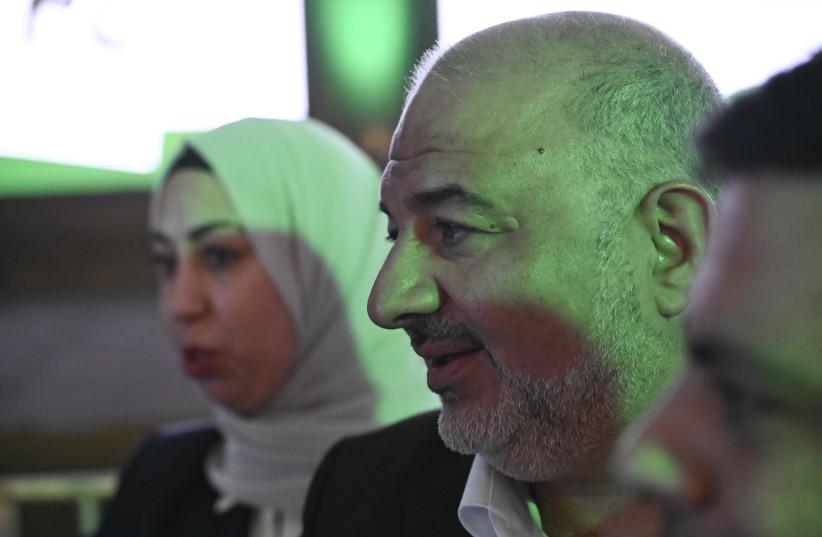
One plausible option could be “a minority government with the Arab parties essentially voting to keep the government in office and protecting it,” according to Stoil, who said his comments did not reflect the views of the US Army or the US government. But he warned that such a minority government could “create a lot of challenges in passing legislation.”
“There is a realistic pathway,” Stoil said, noting, however, that this pathway toward partnership with Arab parties can only be determined once the full results of the election are tallied.
At this point, he explained, there are still many things that can change. For example, Israel’s Central Elections Committee has yet to tally ballots cast by soldiers, prisoners and diplomats stationed abroad, which will reportedly add another 430,000-480,000 votes to the mix.
AIPAC weighs in
The Jewish Federations of North America, meanwhile, released a neutral statement after the election, applauding “the shared values that bind Israelis and North American Jews, including a deep commitment to democratic principles and civic participation.” The organization said it would continue working “with leaders across the political spectrum.”
The American Israel Public Affairs Committee, the pro-Israel lobbying group whose influence has played a sizable role in November’s US midterm elections, offered similar accolades to Israelis for showing “their commitment to democracy through free and fair elections.”
The massive voter turnout among multiple religious groups “underscores Israel’s diversity and steadfast commitment to the democratic process – a value shared and cherished in America,” an AIPAC statement added.