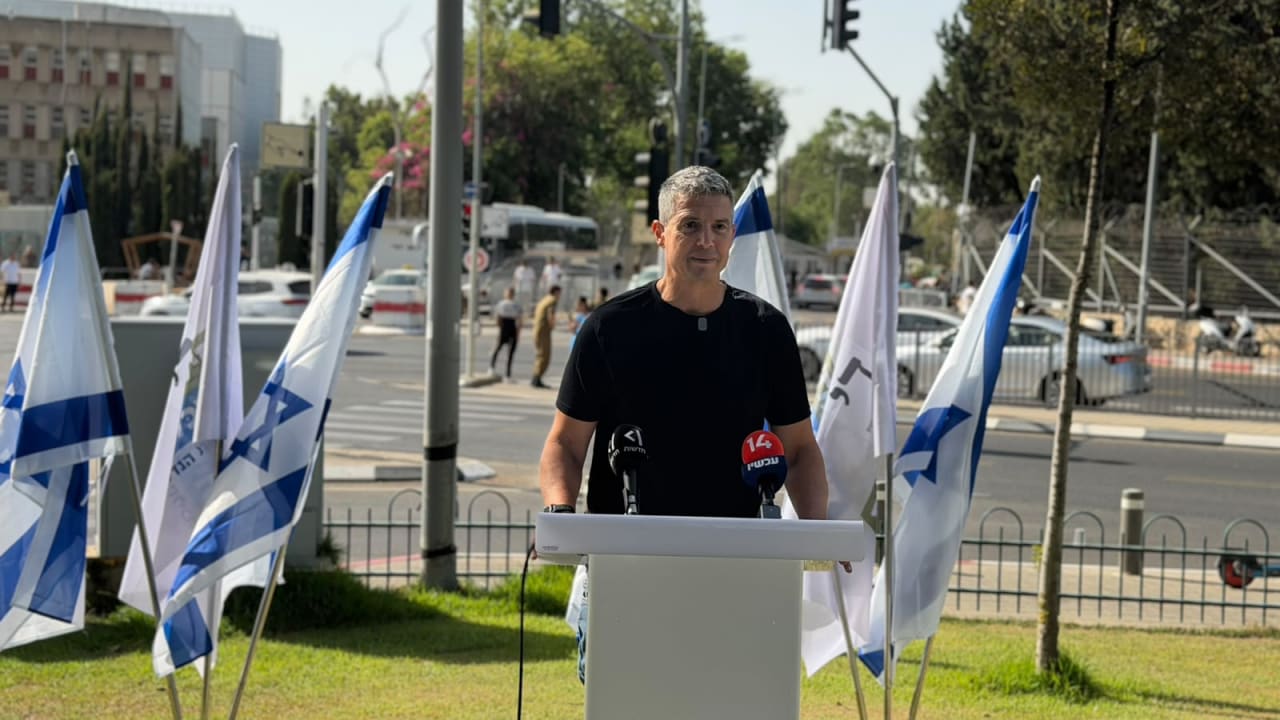
Leader of the Reservists-Economic party Yoaz Hendel on Thursday called on People of Israel party chairman Ofer Winter to sign a surplus vote-sharing agreement ahead of the upcoming elections and jointly declare that the two parties would only join a Zionist government without haredi (ultra-Orthodox) or Arab parties.
Hendel's right-wing party has called for a broad Zionist government without extremists to be formed after the elections. It has stated that it does not belong to either Prime Minister Benjamin Netanyahu’s bloc or the opposition bloc seeking to replace the premier.
Winter has endorsed Netanyahu as prime minister, despite calling for a change in leadership after the October 7 Hamas attacks in 2023. His right-wing party consists of candidates who were not in the Knesset before or part of the security failures surrounding October 7.
"Winter, reverse your statement that you are only with Netanyahu and the haredi parties. You cannot win on the battlefield with haredi parties. You cannot meet the missions on the front," Hendel said in a statement outside the Tel Hashomer IDF recruitment office.
"Let’s sign a surplus vote agreement and jointly declare that we are two parties that will only enter a Zionist government."

"Together, we will be a blocking bloc against non-Zionist governments and coalitions with haredi or Arab parties,"he added.
Hendel made the call for Winter to sign with him ahead of the approaching deadline for submitting surplus vote-sharing agreements before the October 27 elections.
Likud, RZP signed vote-sharing agreement
In Netanayhu's bloc, his ruling Likud party on Tuesday signed a vote-sharing agreement with the Religious Zionist Party (RZP), led by Finance Minister Bezalel Smotrich.
Meanwhile, all the major parties in the opposition bloc seeking to replace Netanyahu signed surplus vote-sharing agreements in September, with the stated aim of increasing the number of seats won by the bloc.
In a surplus vote-sharing agreement, the two parties pool their surplus votes after the initial allocation of Knesset seats following the elections.
If the combined surplus is enough to secure an additional seat, one party can receive it, potentially strengthening the bloc to which the parties belong.
Agreement only relevant if both parties pass electoral threshold
The deal is only relevant if both parties pass the electoral threshold. Both the Reservists-Economic party and the People of Israel have recently polled either just above or below the electoral threshold.
National Security Minister Itamar Ben-Gvir’s far-right Otzma Yehudit party, part of Netanyahu’s coalition bloc, has also not signed a surplus vote-sharing agreement.
The party stated that Likud had refused to sign a surplus-vote sharing agreement with it.
Otzma Yehudit accused Likud of seeking to form a unity government with Gadi Eisenkot, chairman of the Yashar party and the leading candidate for prime minister in the opposition bloc in recent polling.