
Dr. Kobi Barda, a historian specializing in American politics, warned on Friday that strains on US military stockpiles could leave Washington vulnerable if another major power, particularly China, were to enter a conflict.
"If I were an American today, I would be very worried if tomorrow morning China decided to enter the conflict," Barda told 103FM. He added, "There may currently be weakness in the United States."
Barda pointed to reported shortages in US military stockpiles and the amount of time that could be required to replenish key weapons systems.
"It is possible, it has been done in previous wars, when a large part of production was mobilized for the war effort. At least four years, according to the American media, is the time required to replenish the stockpiles of Tomahawk missiles and all the defensive missiles."
"In principle, the feeling is that there is indeed some kind of shortage in the stockpiles, especially in light of the war, which is extremely intense in the Ukrainian arena, and this paints a fairly bleak picture of what is supposed to happen as the campaign continues at this time."
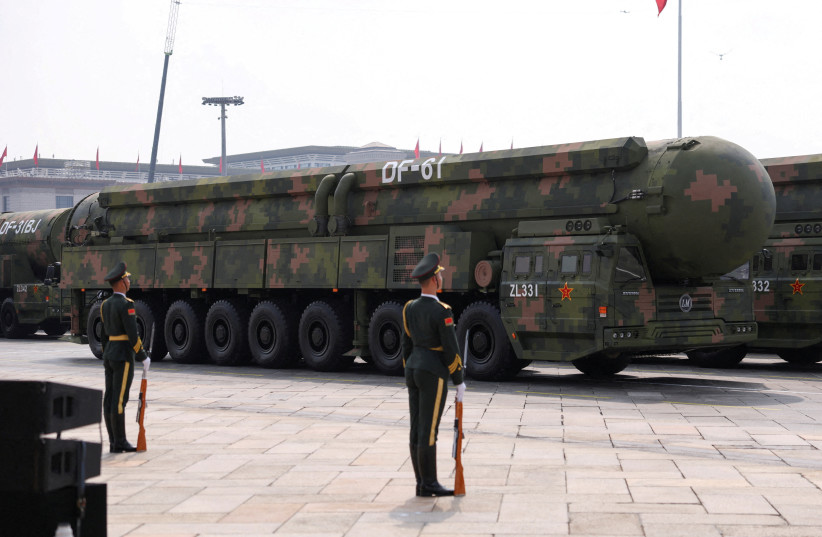
Germany's abundance of Chinese cars could drown local industry, Barda claims
He also cited Germany as an example of how economic dependence on foreign countries could complicate efforts to expand defense production, particularly as European manufacturers face increasing competition from China.
"An interesting story in Germany reflects the challenge posed by China, where Volkswagen is dealing with Chinese vehicles flooding its market. The company wanted to convert some of its production lines to manufacture heavy trucks intended to carry missiles, but the move was blocked because Qatar holds enough shares in the company, and it is blocking the merger with Israeli technology companies."
"The question arises as to what it means to be dependent on an Arab country like Qatar, which decides what the factories will produce and what they will not, while the market is flooded with Chinese products."
Barda also criticized Washington's approach to Iran, arguing that the US appears determined to avoid further complications at least until after the midterm elections.
"It appears that there is a desire at any cost to try to get through the coming period, at least until after the midterm elections. In this context, there is no other way to put it except 'embarrassing,' Iran is demanding to negotiate the division of highway robbery in the Strait of Hormuz with Oman alone, without a third party, and the Americans are willing to swallow it."