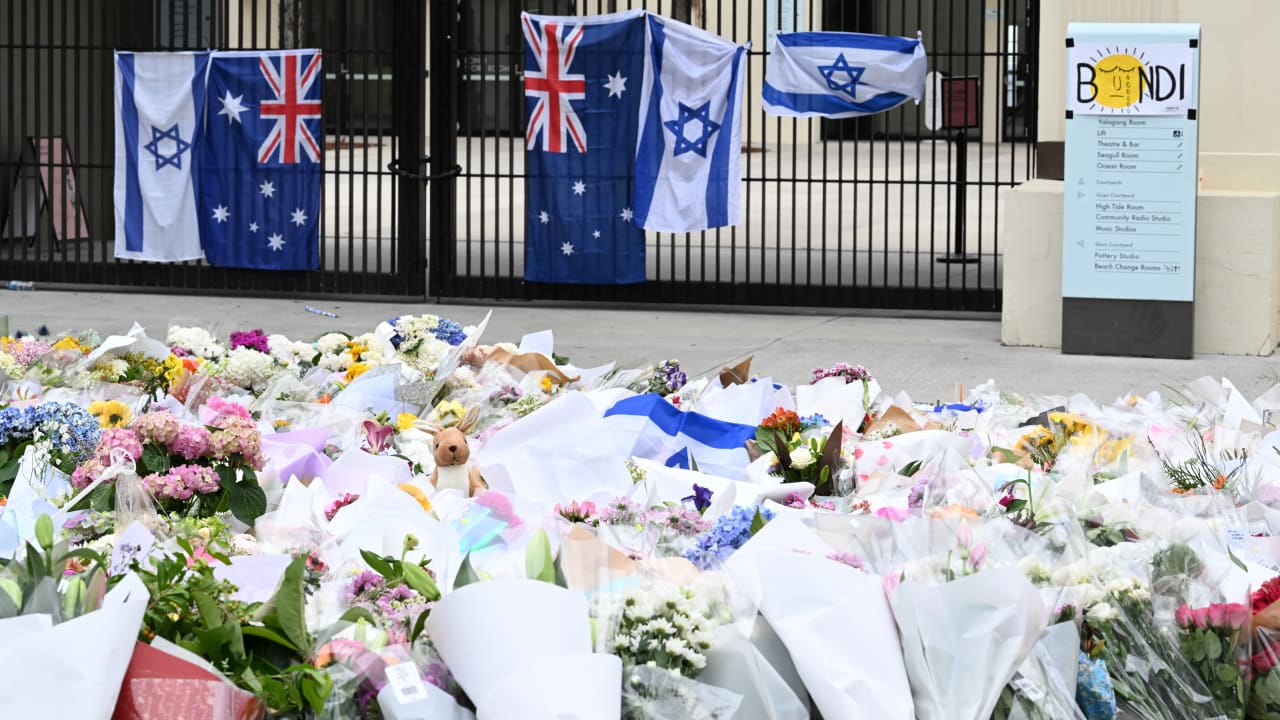
Australian antisemitism “has passed the point of no return,” former president of the Australian Jewish Association, Dr. David Adler, told The Jerusalem Post on Thursday. Adler recently relocated to Israel, citing the surge in antisemitism in Australia.
While the family only arrived on July 9, Adler told the Post that aliyah has been in “preparation for a long, long period of time.”
“We’ve seen a general deterioration in Australia for a long time,” he told the Post. “Australia has essentially outsourced its manufacturing. Its defense capacity is down. National identity is being lost. Education standards are down. There is a crazy socialist activism, left-wing activism. Those things have been building gradually. But no doubt October 7 unleashed a level of antisemitism and anti-Israel extremism that I didn’t think could occur in Australia.”
“On October 8, there were some leaders of the Muslim community and some Muslim groups in Australia celebrating on the streets. On October 9, we had the riots in front of the Opera House.”
What Adler found the most shocking was that the authorities “failed to act” after these incidents.

Australia passed point of no return, 'all downhill'
“There was not a single arrest from the riots at the Opera House, despite a number of laws being broken. And that area, I know from security experts, is covered by high-definition CCTV. However, the authorities chose not to act and instead warned the Jewish community not to go there,” he explained.
Since then, Adler said it’s “been all downhill.” He said he has lost track of the number of threats made against him, including death threats.
This led him to arrive at the viewpoint that the trends in Australia “have passed the point of no return.”
“The tipping point has been reached and passed. And even though there’s a Royal Commission running at the moment, and it’s doing a good job in exposing some of the accounts and evidence of antisemitism, I do not have confidence in efficient action being taken to deal with it.”
Adler told the Post that anti-Jewish violence is predominantly coming from Islamic extremism, but that “Australia has taken nowhere near enough action” to combat this. “It should do things like expel the hate preachers, deport the hate preachers, close down mosques that are teaching extremist and radical views, and in fact has done some things in the opposite.”
“The whole antisemitic, anti-Israel extremism is on a level that no one forecast.”
Adler mentioned how Dr. Hillel Newman, Israel’s ambassador to Australia, recently told The Australian that he has never come across such hatred as he has in his Australian diplomatic post, and he has served in two Muslim countries in the past.
“I think [Newman’s] assessment is correct, and it’s refreshing in my view that we have a diplomat, a senior diplomat, who’s prepared to call out the issues as he sees them.”
'We will see an exit of certain parts of the Jewish community from Australia'
These issues, Adler said, form part of the “whole package of reasons” why he and his wife decided to immigrate to Israel.
“So we’re officially citizens of Israel and absolutely loving it,” he told the Post. “It’s such a different atmosphere between Australia and Israel. You only need to be here 10 or 15 minutes, and you perceive the difference.
The first main difference, Adler said, is the pride in national identity.
“You wander around Israel anywhere, and you see Israeli flags everywhere. You see them on homes, on shops, on cars. In Australia, it’s much, much less common to see Australian flags flown privately.”
The other major difference, he said, is the mood of the people.
“There is a happiness, there’s an optimism, there’s a friendliness.”
“My final comment for Australian Jews is I’d urge them to assess the trends and make their evaluation as to what is best for themselves and their families.”
“I think we will see an exit of certain parts of the Jewish community from Australia.”