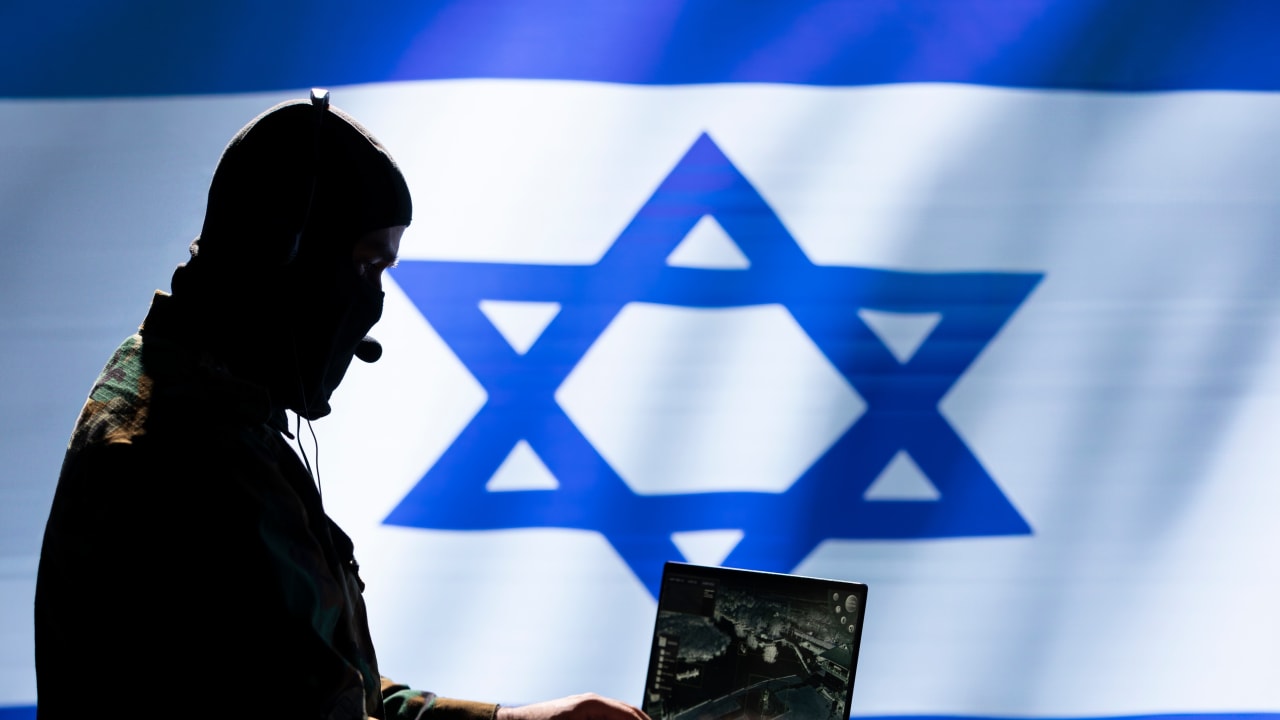
A new global reality is forcing nations to fundamentally reassess their security. As tensions in Europe and Asia escalate and defense budgets swell worldwide, the core question is no longer just about acquiring the next piece of technology, but about how to win on a complex, integrated battlefield. It is here, in this nuanced challenge, that Israel’s unique strategic value shines bright.
For years, the prevailing discourse has been that disruptive technologies would fundamentally redefine warfare. Space technologies, drones, UAVs, robotics, cyber capabilities, and even artificial intelligence captured the imagination of those envisioning the future battlefield. However, Israel’s impressive military victories, particularly concerning Iran, have taught a sobering lesson: these technological innovations were not the central factor in achieving decisive outcomes.
The ability to strike the nuclear program with impressive effect, to hunt surface-to-surface missile launchers in a manner unprecedented in the history of warfare, to achieve air superiority over Tehran, and to intercept 99% of UAVs and over 80% of surface-to-surface missiles - these successes are the result of a unique combination. They are a fusion of legacy systems, new technologies, superior intelligence, and the capacity to connect that intelligence to kinetic effect in real-time.
The backbone of Israel's capabilities
The backbone of decisive military power, therefore, remains proven legacy systems. There is no software-based substitute for the strategic capability of an F-35 fighter jet or the ground dominance of a main battle tank. The recent historic defense against Iran's massive attacks served as a powerful demonstration of this principle: victory was not achieved by drones or AI alone, but through a symphony of integrated power, combining the superiority of legacy air power with the world’s most advanced multi-layered missile defense systems.

This is where Israel's distinct value lies: in our proven ability to operate masterfully at both ends of the technological spectrum. Our advantage is not just in developing cutting-edge systems, but in seamlessly weaving them into our existing military doctrine and platforms. We understand that the future of warfare is a hybrid, a potent mix where advanced algorithms help commanders guide the firepower of legacy assets, and real-time intelligence from advanced sensors creates a truly unified, lethal force. This capacity for deep integration is our core competitive advantage.
The world is taking notice. The return of great power competition has reignited interest in robust defense industries, creating a significant economic opportunity. However, nations are not merely shopping for hardware. They are seeking proven solutions to complex security dilemmas. They need a partner who understands not just the technology, but the operational art of combining it with existing forces to create a decisive effect.
This positions Israel as more than a vendor; it positions us as an essential strategic asset. Our value proposition is built on a unique combination of factors: world-leading innovation and initiative, ingrained in our military culture and constantly enhanced by our dynamic tech ecosystem; unparalleled, continuous operational experience against a vast array of threats; and a globally unmatched capability for multi-dimensional defense. Critically, it is our mastery of fusing intelligence and precision fire - turning information into immediate, decisive action - that sets us apart.
Ultimately, Israel's offering to the world is not just a catalogue of advanced weapons. It is a holistic defense concept, battle-tested and refined in the most demanding proving ground on earth. For any nation serious about its security in the 21st century, partnering with Israel means acquiring not just technology, but experience, a forward-thinking doctrine, and a blueprint for mastering the integrated battlefield. This is the foundation of our economic opportunity and, more importantly, our enduring strategic value to the world.